EES: Our Experience

In my article on the new EES (Entry/Exit System) I mentioned I’d report back what we experienced entering and exiting the Schengen Area. Since I have a European passport and don’t use my Australian passport to enter the Schengen Area, I would not have experienced what was described in the article I wrote back in October, but my wife Sharon would. She only has an Australian passport (for the moment).

We had entered the UK at Heathrow which required an ETA (Electronic Travel Authorisation), duly done a few months earlier. The ETA is not connected or has anything to do with the European EES or the ETIAS (European Travel Information and Authorisation System) that will come into effect later in 2026. The UK and the EU (or those in the Schengen Area) have their own security checks as well as fees where (and when) applicable, etc.

We used the e-Gates at Heathrow and had no issues, all done automatically, no manual checks for the ETA. When we left the UK and flew to Pisa, Italy, I thought perhaps Sharon would have to go through that process described in my article, a photo and fingerprint taken.

On arrival in Pisa at Immigration, we separated, I went to the European passport holders lane with the e-Gates while she went to the other queue for all other passports. There were more people there but she went through quicker than me, even though she got her passport looked at and all checked manually. I looked at one of the border guards and asked why so slow with e-Gates, he just shrugged his shoulders.

So basically all that fuss about long queues and issues with travellers, which I wasn’t expecting at Pisa anyway since it is a small regional airport, never eventuated. Face photos and fingerprints weren’t taken.

On departure from Italy at Rome’s Fiumicino Airport, we both used e-Gates. Again we separated. Me: the European (Schengen) queue; Sharon: the Australia, UK, USA, Canada, NZ, Singapore, etc. queue. Other countries not on the sign in another queue.

I used my European passport again. Always use the same passport to enter and leave a country, in this case the Schengen Area. If you don’t you will cause issues that may even stop you from travelling and that can have serious consequences. My wife, again quick, scanned her photo page and then a biometric check. No fingerprint needed. My process was the same.

What about others? What did they experience? Other friends currently travelling around Europe have had the same experience. No issues. One just arrived in Rome said nothing was done. He’s used his Australian passport. He couldn’t use his European passport it had expired and didn’t want to renew it. Not sure which passport his wife used but she’s a dual citizen. They’ll be visiting other European countries so are fine now that they’ve entered. Another fellow Australian traveller already in Europe before the introduction of the EES, said she had no issues moving around and going to the UK and back to Europe.

The answer why nothing was done at Pisa and in Rome (for my friend and his family) and my other friend who has been in and out of Europe is because the EES is being deployed gradually across the 29 European member states. This is over a period of 6 months and these countries are introducing different elements of the EES in phases. Travellers’ biometric data (facial image and fingerprints) is not being collected at all border crossings immediately as well as their personal information may not be registered in the system. Passports are still being stamped. The progressive implementation will be ongoing until 9 April 2026, with the EES fully operational from 10 April, if all goes to plan.

For now, a lot of fuss over nothing. Let’s hope it stays that way and things go smooth…until ETIAS comes around in the last quarter of 2026. Then we’ll discuss about that.


Europe’s New Entry System for Non-EU Nationals: What it Means

The European Union’s new digital border control system for non-EU citizens entering and leaving the Schengen zone—the EES (Entry/Exit System)—will come into effect from Sunday 12 October. The system will be rolled out over a period of 6 months until 10 April 2026. When fully implemented it will streamline movements of non-EU travellers, monitor visa-free stays and strengthen border security.

What can we expect with the roll out? At first some confusion and a few bottlenecks at the EU entry points: airport immigration and border crossings. Seaports where travellers may be coming from countries outside the EU, such as the UK, North Africa, Turkey and the Middle East will also be affected as well as passengers on the Eurostar train service from London to France, Belgium and The Netherlands.

The processing times during the initial stages will certainly be slow as many travellers will be unprepared while border officials will have to adjust to the changes.

Under the new rules, non-EU citizens, will be required to create a digital profile when entering the Schengen zone for the first time. The process involves a photo, fingerprints and answering standard entry questions at a kiosk. Officials will be standing by to monitor and help.

Once registered, the biometric data will remain valid for three years. Subsequent visits to the Schengen zone will not require the process to be repeated, only a quick check of the fingerprint or photo taken previously.

Nostalgia

Many travellers will miss one of the their favourite things about travelling, the manual stamping of passports. The new fully electronic system will not require stamping and checking pages in your passport. If there are any discrepancies border security will intervene, but human intervention will be mostly not required.

The Schengen Area

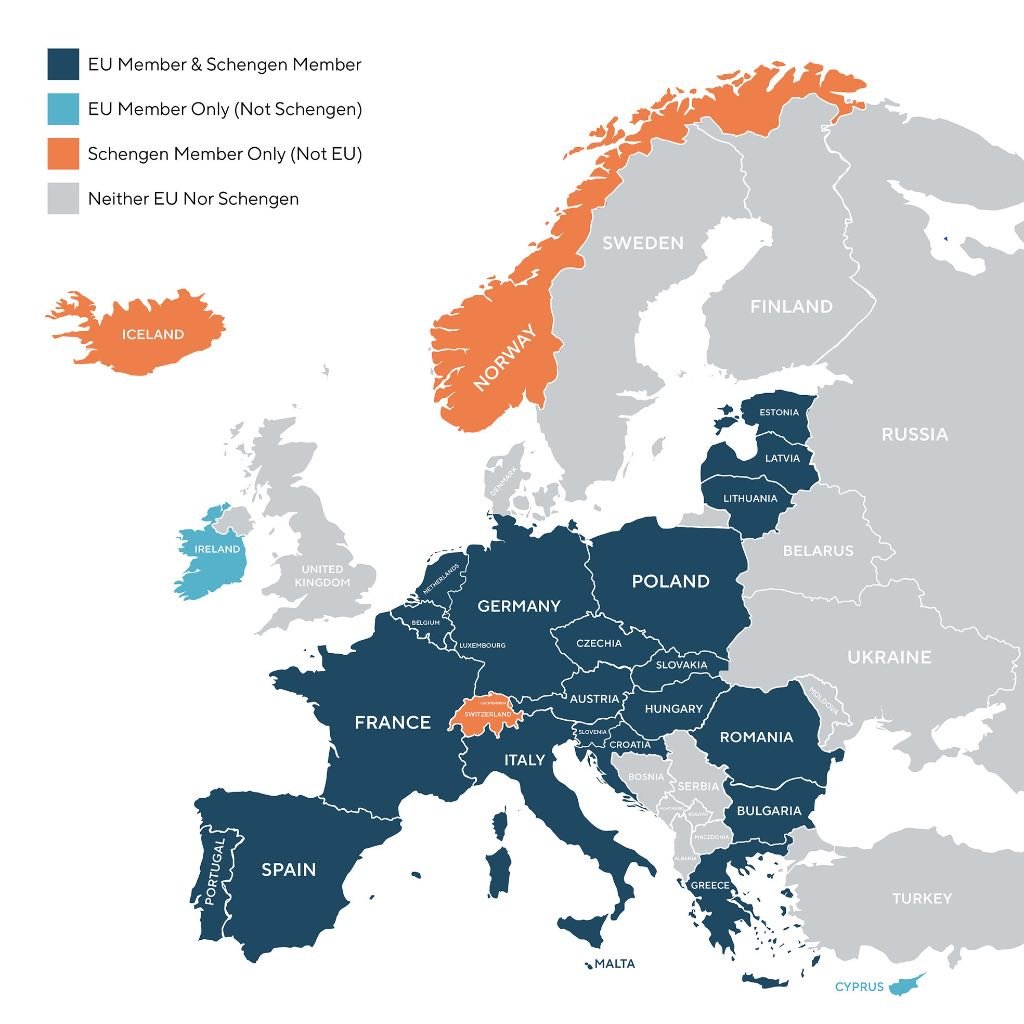
The area or zone known as Schengen is made up of 29 countries. Among these countries travellers will be able to move freely without border checks and stay up to 90 days within any 180-day period. The new digital system will make tracking stays automatic. Anyone who overstays risks fines, detention, or entry bans across the member states.

Popular travel destinations outside the Schengen zone include the UK, Ireland, Türkiye, Serbia, Montenegro, Cyprus and several Eastern European nations, they are not covered by the EES, but entry from them will require the first time process.

Cyprus plans to join the Schengen Area in 2026 after completing technical preparations by end of 2025.

The EES won’t affect me personally or my children, we are all EU citizens. The wife isn’t but she will be in future when she gets her citizenship sorted out over the next 6 months. In the meantime though she’ll experience this in November. I’ll report back then how things went, but my guess is it won’t be as bad as many predict. Perhaps our advantage is we’ll be entering through a smaller airport with much less traffic volume and of course I’ll be there with her to talk her through the process. I went through a similar process in Singapore a few years back when I was required to have a fingerprint (thumb print) and photo taken at Changi Airport’s immigration. On subsequent visits e-Gates were used. No more human interaction. Interesting that Australia does not take fingerprints at immigration or when applying or renewing a passport. Facial recognition is the only biometric data used.

In summary

  • Biometric Data: Travellers will provide a passport, have their photo taken and fingerprints scanned
  • Electronic Registration: The information collected is stored in a database, creating a digital record of entry and exit dates and locations.
  • Replaces Passport Stamps: Traditional passport stamps will no longer be used for entry and exiting the Schengen Area.
  • Duration of Stay: The EES will accurately monitor how long non-EU nationals stay in the Schengen Area.
  • Progressive Rollout: The system is being phased in, with full operation expected by April 10, 2026.

Who it Applies To

  • Non-EU, non-Schengen citizens travelling for short stays in the Schengen Area. This includes citizens from countries like the UK, Australia, NZ, Canada, USA and others who don’t need a visa for short visits.

What to Expect

  • First Entry: You’ll need to visit a kiosk to provide your photo and fingerprints.
  • Subsequent Entries: You will then only need to provide your passport and undergo a quick biometric scan (e-Gates).
  • Potential for Queues: Initially, queues may form as people become accustomed to the new process.

For more information visit: https://travel-europe.europa.eu/ees or https://www.smartraveller.gov.au